Why we shipped schema before "AI SEO" had a name
In 2022 our engineering team made a bet on structured data. Three years later, that bet is the foundation of every Revenue Engine install. Here's what we did, and what we learned.
In early 2022, the SEO industry was still arguing about Core Web Vitals. Our engineering team was reading something else entirely: the public release notes from OpenAI, Anthropic, and a handful of research labs that hadn't yet shipped products.
The signal was unambiguous: large language models were going to become a primary discovery channel. Not eventually. Soon.
So we made a bet.
The bet
Every site we shipped, starting in Q2 2022, would be structured-data-first. Schema.org markup wasn't an afterthought, a plugin, or a nice-to-have. It was a launch requirement. Menus, services, reviews, inventory, locations, hours, FAQ — every entity our clients owned, marked up.
We did this:
- Before there was a category for it.
- Before any tool measured it.
- Before most of our clients understood why we were doing it.
The pitch to clients was honest: "We can't prove this will pay back. We think it will. We're going to do it anyway because it's a small marginal cost and the upside is asymmetric."
What "structured-data-first" actually meant
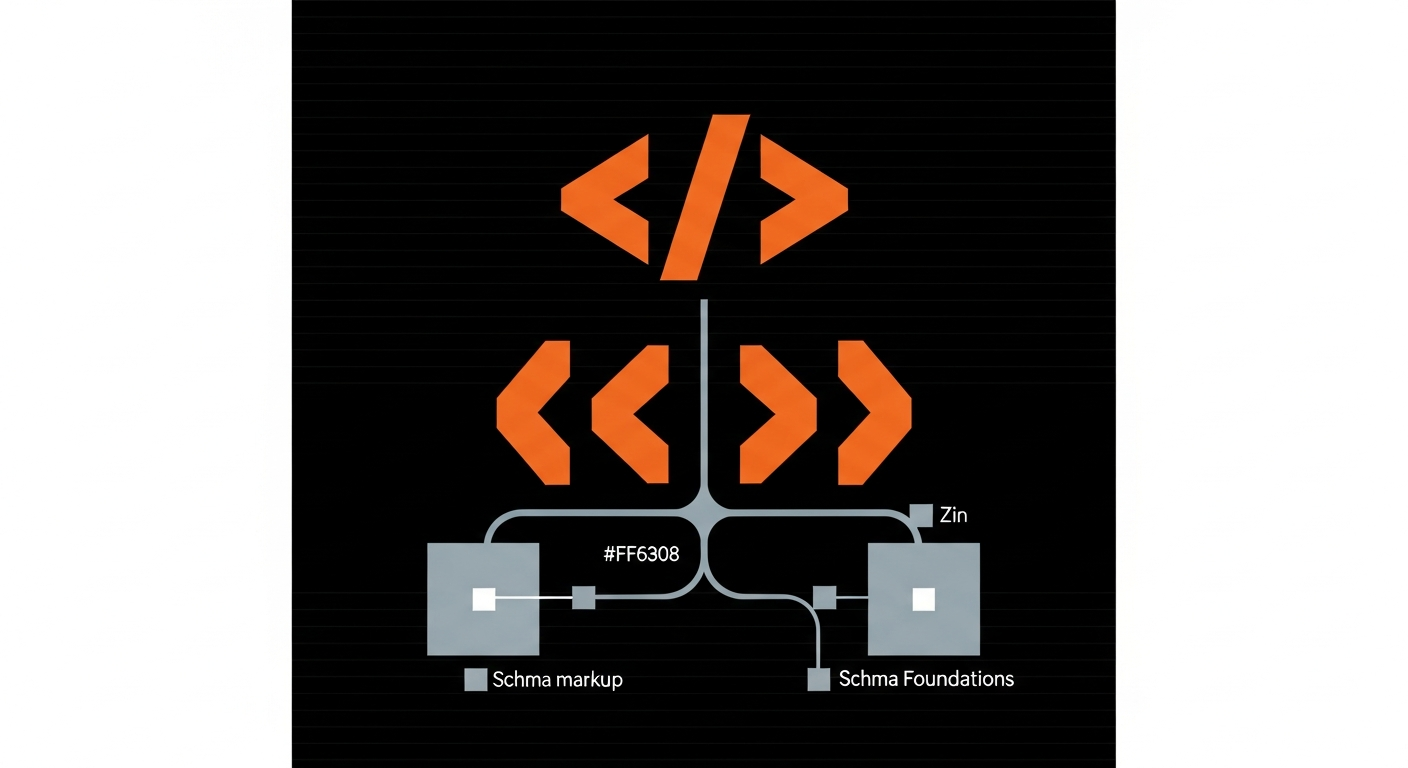
It wasn't just adding <script type="application/ld+json"> to a page template. The discipline was deeper:
- Source of truth at the data layer. Menu items, service descriptions, location info — all lived in a typed schema, not in WYSIWYG-edited HTML. Every render of every page derived from that schema.
- Validation in CI. Every build ran through Google's Rich Results Test and Schema.org's validator. A missing required field failed the build.
- Aggressive entity linking.
sameAsto the official social profiles,serviceAreamapped to GeoCoordinates,menuItemlinked toOfferlinked toPriceSpecification. If two entities could be cross-referenced, they were. - No dynamic-only rendering. Schema had to exist in the initial HTML response, not injected post-hydration. Crawlers and small models don't always wait for JavaScript.
That last point matters more now than it did then.
What happened
Three years later:
- ChatGPT cites our clients by name when users ask category questions ("best Italian restaurant in Brooklyn", "podiatrist that does same-day appointments in Phoenix").
- Perplexity surfaces our clients with structured snippets — pricing, hours, services, ratings — pulled directly from the schema we shipped in 2022.
- Google's AI Overviews quote our clients' service descriptions verbatim, with attribution.
- A multi-location restaurant client we onboarded in 2023 now sees roughly 31% of new-customer first-orders attributed to AI-assistant referrals. Three years ago that channel didn't exist.
None of this is luck. The data was already there, structured and waiting, when the models started reading.
What we'd do differently
The bet was right. The execution wasn't perfect. Things we'd change if we were starting today:
- Ship the AI Mention Tracker first, not last. We measured site-level structured data for years before we built monitoring on top of how the models actually quoted our clients. The feedback loop should have been earlier.
- Be more aggressive about review schema. We were conservative early because of FTC guidance ambiguity. The clients who pushed us to mark up reviews comprehensively saw the largest AI-citation lift.
- Invest in
Personschema for service businesses. Identifying the practitioner — the actual hairstylist, dentist, attorney — turns out to matter to the models far more than we expected.
Why this is the foundation of the Revenue Engine
We don't sell "AI SEO" as a service. We don't think it's a service. It's table stakes — the floor, not the ceiling.
The Revenue Engine is what gets built on top of a structured-data-first foundation: the embedded ordering and scheduling that converts the discovery into a transaction, the payments stack that keeps the margin on your domain instead of leaking it to a marketplace, the automation that turns one customer into ten.
But all of that compounds on the foundation. And the foundation is the bet we made in 2022.
If you're not yet structured-data-first, start there. If you are, the next leverage point is measuring what the models actually say about you — which is exactly why we built the AI Mention Tracker.
Either way, the train left the station three years ago. The good news is you can still catch it.