
How a Series B health brand went from invisible to 47 AI citations in 90 days
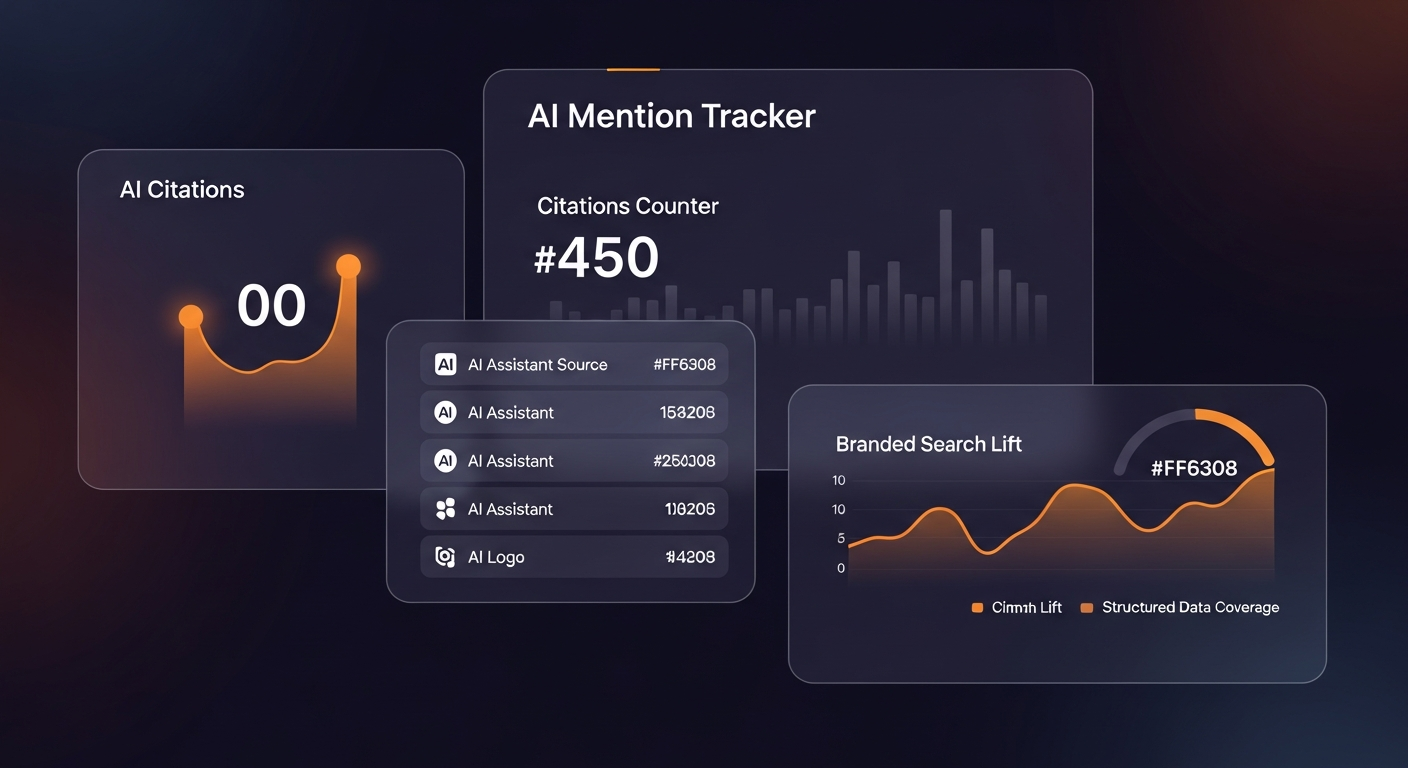
Competitors were getting cited in ChatGPT and Perplexity answers while this Series B health & wellness brand was invisible in the prompts that mattered to their category. We deployed the AI Mention Tracker, closed the structured-data gaps on their authority pages, and shipped the fixes — taking them from 0 to 47 AI citations in 90 days and lifting branded search 61%.
The context
A Series B health & wellness brand had a strong product and a credible content library, but its category was increasingly being decided inside AI assistants. Buyers were asking ChatGPT and Perplexity for recommendations, and the answers were naming competitors. The brand had invested in traditional SEO for years; nobody had checked whether the pages search engines liked were the same pages answer engines could actually parse and cite.
What was holding them back
When we ran the prompts that mattered to their category, the brand simply didn't appear — competitors were cited by name while they were absent from the answer entirely. The root cause was that their authority pages read well to humans but were thin to machines: missing or malformed structured data, no clear entity markup tying the brand to its expertise, and key claims buried in prose with nothing an answer engine could lift and attribute. They had no way to even see the problem — there was no measurement of AI visibility, so the gap was invisible until a prospect mentioned a competitor 'ChatGPT recommended.'
What we ran
We deployed our AI Mention Tracker to measure where the brand stood across the assistants and the category prompts that drove real demand, turning an invisible problem into a scoreboard. That surfaced exactly which authority pages were being skipped and why. We then closed the structured-data gaps — adding and correcting schema, tightening entity markup, and restructuring key claims so they were machine-extractable and clearly attributable to the brand — and shipped the fixes page by page, tracking each one's effect on citations as it went live.
The outcome
Within 90 days the brand went from 0 to 47 AI citations across the prompts we were tracking — moving from absent to consistently named in the answers buyers were reading. Branded search lifted 61% over the same window as that AI visibility fed back into how people discovered and looked them up. Just as importantly, they now have a standing measurement of AI visibility, so the category can't quietly shift around them again without it showing up on the tracker.
Anonymized and representative of the work — not a guarantee. Your results depend on your starting point.
More marketing case studies
How a multi-clinic wound-care group cut cost-per-appointment from $1,356 to $126
A seven-clinic wound-care group across the NYC metro was paying a sitting CMO and agency fees on top of an unmanaged website and paid search with no conversion tracking — they couldn't see what their ad spend was doing. We took over the marketing, rebuilt the site on our platform, and fixed analytics end-to-end. Cost per appointment fell from $1,356 to $126 while total spend dropped 37%.
Read the case studyHow a 12-location restaurant group replaced four vendors with one revenue engine
A 12-location restaurant group was paying four separate vendors — website, SEO, ordering, and paid media — and getting siloed reports from each, with no way to see what actually drove a customer. We consolidated the stack onto our platform, unified attribution, and rebuilt their menu sites with structured data and direct ordering. Customer acquisition cost dropped 38% and direct-channel orders grew 2.1×.
Read the case studyWant more customers? Let's grow it.
Tell us where the growth is stalling. We'll map it out in a 30-minute call and show you what it takes to bring in more customers.