SMS is the new email. Email is the new direct mail. Here's how we're sequencing both.
Email open rates are not what you think they are. SMS open rates are. The right sequence depends on which channel is doing which job — and most operators are running them inside out.
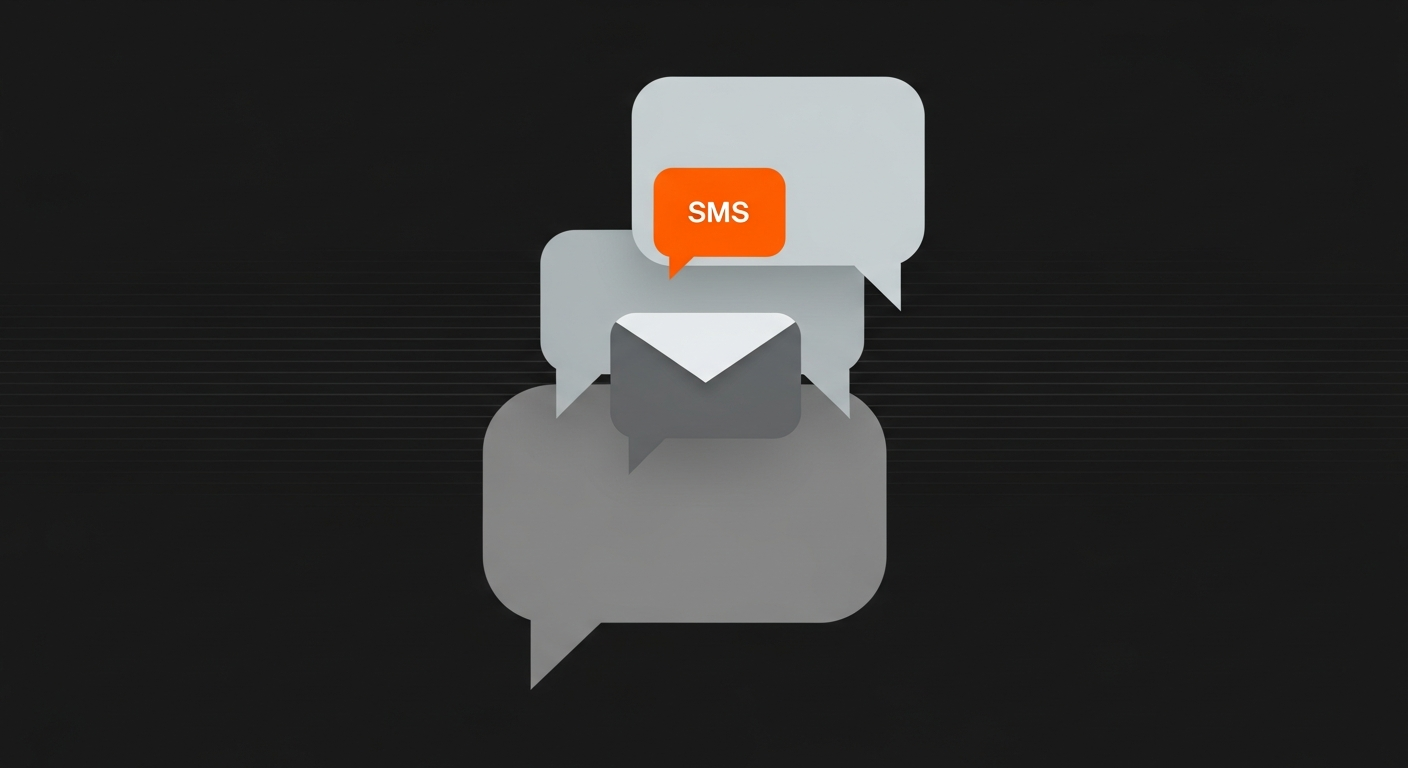
Email open rates are not what you think they are. SMS open rates are. After three years of running marketing automation across our client base, the channel hierarchy has inverted, and most operators are still running them in the old order.
This is the framework we use now.
The channel reality, 2026
Email open rates for the average local business client we measure: 18-26%. Click-through rates, 1.5-3%. Even those numbers are inflated by Apple Mail Privacy Protection's prefetch behavior. Real human-eyes-on-message rates are lower than reported.
SMS open rates: 95%+, with 92%+ read within 5 minutes. Click-through rates from SMS to website: 8-19% for relevant offers. Opt-out rates: 1-3% per message for first-time campaigns, dropping after the audience self-selects.
Email isn't dead. It's just stopped being the operating channel. SMS is the operating channel.
What this means for sequencing
Three rules we use across every Revenue Engine automation install:
Rule 1: SMS for time-sensitive, transactional, and high-intent. Reservation reminders, order updates, "your appointment is in 1 hour," abandoned cart follow-ups within 30 minutes, day-of promotions for low-volume merchandise. Anything where the customer wants to hear from you and the information has a half-life of hours.
Rule 2: Email for context, depth, and segmentation. Newsletters, monthly updates, longer-form storytelling, cohort-specific re-engagement. Anything where the customer is making a decision over hours or days, not minutes, and where you have something to say beyond a sentence.
Rule 3: Direct mail for retention triggers and high-LTV reactivation. Yes, direct mail. We're seeing meaningful response rates from physical mail to lapsed high-value customers — birthday cards from a dental practice, handwritten thank-you notes from a fine-dining client, branded postcards from a salon to clients who haven't booked in 90 days. Open rate: ~100%, because it's a physical object on a counter. Cost per piece: $1.50-$4. Math works for cohorts where the LTV justifies it.
Where most operators are running this inside out
The pattern we see most often:
- Big, generic monthly newsletter to the whole list (email).
- Occasional sale/discount email blast to the whole list (email).
- No SMS program at all — or a haphazard one used for the wrong things.
- Direct mail only used for acquisition (not retention).
This is the inversion of where the leverage is. You're using the lowest-engagement channel for the highest-frequency communications, and the highest-engagement channel for nothing or for blasting the wrong things.
What good sequencing looks like
A real Revenue Engine automation pattern, lightly sanitized, for a multi-location restaurant client:
Day 0 (customer makes first reservation):
- SMS confirmation (5 min after booking)
- Email confirmation with restaurant story, dietary policies, parking info (10 min after booking)
Day of reservation:
- SMS reminder 24 hours before with one-tap modify/cancel
- SMS reminder 2 hours before with parking link
Day after:
- SMS thank-you with a "rate us" link (1-tap)
- Email with chef's note, menu update, info on private events
Week 4:
- Email cohort campaign segmented on order frequency
Week 12, if no return visit:
- Direct mail postcard with handwritten greeting and a small incentive
Week 26:
- SMS reactivation with a personalized item recommendation
The principle: each channel does the job the channel is best at. None of them are doing all of it.
The compliance and consent reality
Two operational notes that operators always underestimate:
SMS consent must be explicit, double-opted-in, and category-specific. The TCPA penalties for getting this wrong are not theoretical. Our automation layer enforces this; if you're rolling your own, do not skip the legal review.
Frequency caps matter more for SMS than email. Email can be wrong without consequence beyond a "mark as spam." SMS getting wrong gets you rate-limited by carriers. We cap SMS at 2 marketing messages per customer per week, hard.
What to do this week
If you're not running an SMS program at all, that's the first leverage point. Start with transactional and reminder use cases — those have the lowest opt-out risk and the highest immediate operational value.
If you're running a generic monthly newsletter to your whole list, segment it. Even a crude split (active vs. lapsed) usually doubles engagement.
If you're not doing direct mail at all and you have a meaningful population of high-LTV lapsed customers, run a 100-piece test. The math is usually surprising.
The Automation product page covers how we build this end-to-end inside the Revenue Engine. The architecture matters less than the framework. Use the framework even if you don't use us.