
How a flight club replaced spreadsheets with one scheduling, currency & billing system
A member-owned flying club was running aircraft scheduling, pilot currency, maintenance, and billing on spreadsheets and a shared calendar nobody trusted. We replaced the whole patchwork with one custom system wired into their website — and double-bookings went to zero.
The context
A member-owned flying club operating a small fleet had grown faster than its tooling. Bookings, pilot currency records, maintenance tracking, and monthly billing were all handled by a volunteer board on the side — each in a different place, none of them talking to each other. As membership grew, the seams started to show.
The broken system
Scheduling lived in a shared calendar that anyone could overwrite, so double-bookings happened nearly every week and members stopped trusting it. Pilot currency was tracked by hand, which meant out-of-currency pilots occasionally booked aircraft they weren't cleared to fly. Maintenance downtime wasn't reflected anywhere, so aircraft got booked while they were grounded. And month-end billing was a two-day slog of cross-referencing flight logs against spreadsheets to work out who owed what.
What we built
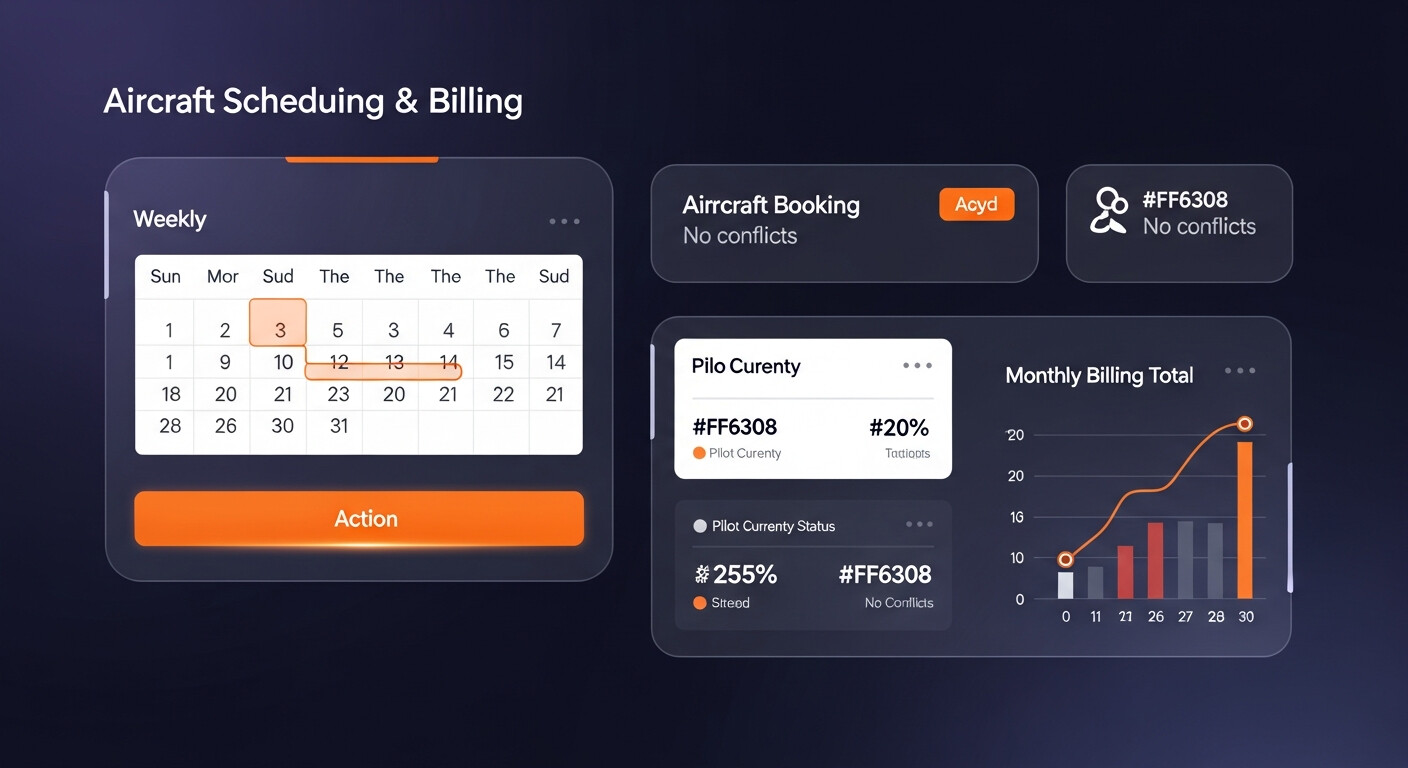
We built a single custom system — scheduling, currency, maintenance, and billing — that plugs straight into the club's existing website so members book where they already are. A rules engine understands the fleet, each member's ratings and currency, and live maintenance windows, so the system simply won't allow a booking that breaks the rules. Members self-serve their own reservations, currency is checked automatically at booking time, grounded aircraft disappear from availability, and billing is generated from actual logged usage instead of being reconstructed by hand.
The outcome
Double-bookings dropped to zero the month it launched — the calendar is finally a source of truth instead of a source of arguments. Month-end billing that used to eat two days of a volunteer's time now runs in minutes off real usage data, and out-of-currency bookings stopped happening entirely because the system enforces the rules the board used to police manually.
Anonymized and representative of the work — not a guarantee. Your results depend on your starting point.
More software case studies
How a five-location repair business got one real-time view of every job
Five repair locations tracked work on paper tickets and three disconnected apps, so owners had to make phone calls just to learn what was happening. We built a custom job-tracking dashboard around their real workflow — technicians now close tickets ~30% faster.
Read the case studyHow a wholesale distributor retired a crashing order system for one synced portal
A regional distributor's 12-year-old order-entry system kept crashing and forced staff to re-key every order by hand between systems that didn't talk. We rebuilt it as a custom order portal with the integrations they were missing — orders now flow through once and stay in sync.
Read the case studySomething broken? We'll build the fix.
Tell us what's slowing the business down. We'll scope it in a 30-minute call and show you what fixing it actually takes.